
By Florence Mafomemeh
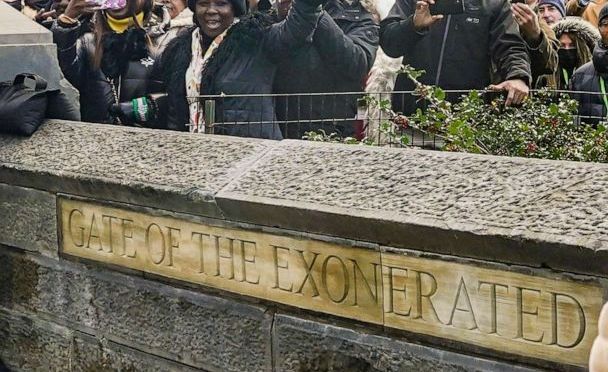
An entrance to New York City’s Central Park is now called “The Gate of the Exonerated” named in honor of the Central Park Five, the five men whose convictions in the notorious 1989 rape of a jogger were all thrown out more than a decade later.

New York City officials voted to honor the Central Park Five by naming the 110th Street entrance of Central Park the Gate of the Exonerated. Mayor Eric Adams called the project’s approval Monday “a moment of truth and reconciliation for New York City” and thanked Harlem community leaders for their advocacy.
The teens that came to be known as the “Central Park Five,” and later the “Exonerated Five,” were convicted in the rape and assault of Trisha Meili, a 28-year-old white investment banker. The so-called Central Park Five — Raymond Santana and Kevin Richardson, both 14 at the time, 15-year-old Antron McCray, 16-year-old Korey Wise and Salaam — served six to 13 years in prison before their convictions were thrown out in 2002. Evidence linked Matias Reyes, a murderer and serial rapist, to the vicious attack that left its 28-year-old victim, who is white, with permanent damage and no memory of the assault.
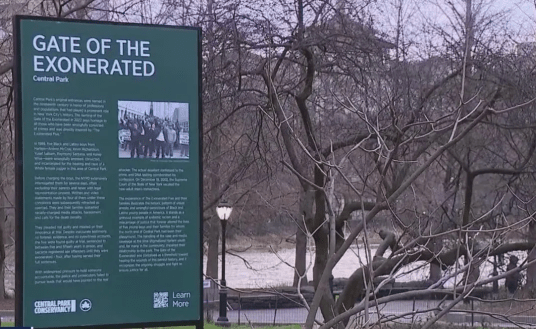
The new name will be on a gate near the northeast entrance to the park in Harlem, where the five men, who were teens at the time, entered on the evening of April 19, 1989. The entrance, which was previously unnamed, and just north of the Charles A. Dana Discovery Center is reportedly the first of Central Park’s dozens of entrances to be newly named since the 1860s.
“The Gate of the Exonerated” is said to be the first of its kind within the United States and possibly in the world that speaks to the idea of exoneration of people. Other entrances to the park have been labeled to reflect groups of people who live and work in the city, with names like Artisans’ Gate, Scholars’ Gate and Strangers’ Gate.
The exonerated men have gone on to win a $40 million settlement from the city and inspire books, movies and television shows.

